Background
Roof shingle removal is brutal work. Roofers have to rip up shingles and nails while balancing on sloped, sometimes steep roofs, and the tools that exist to help (like the Rapid Roof Remover and Shingle Hog) are pneumatic, heavy, and need a separate compressor. That makes them basically unusable once you get past a 6/12 pitch.
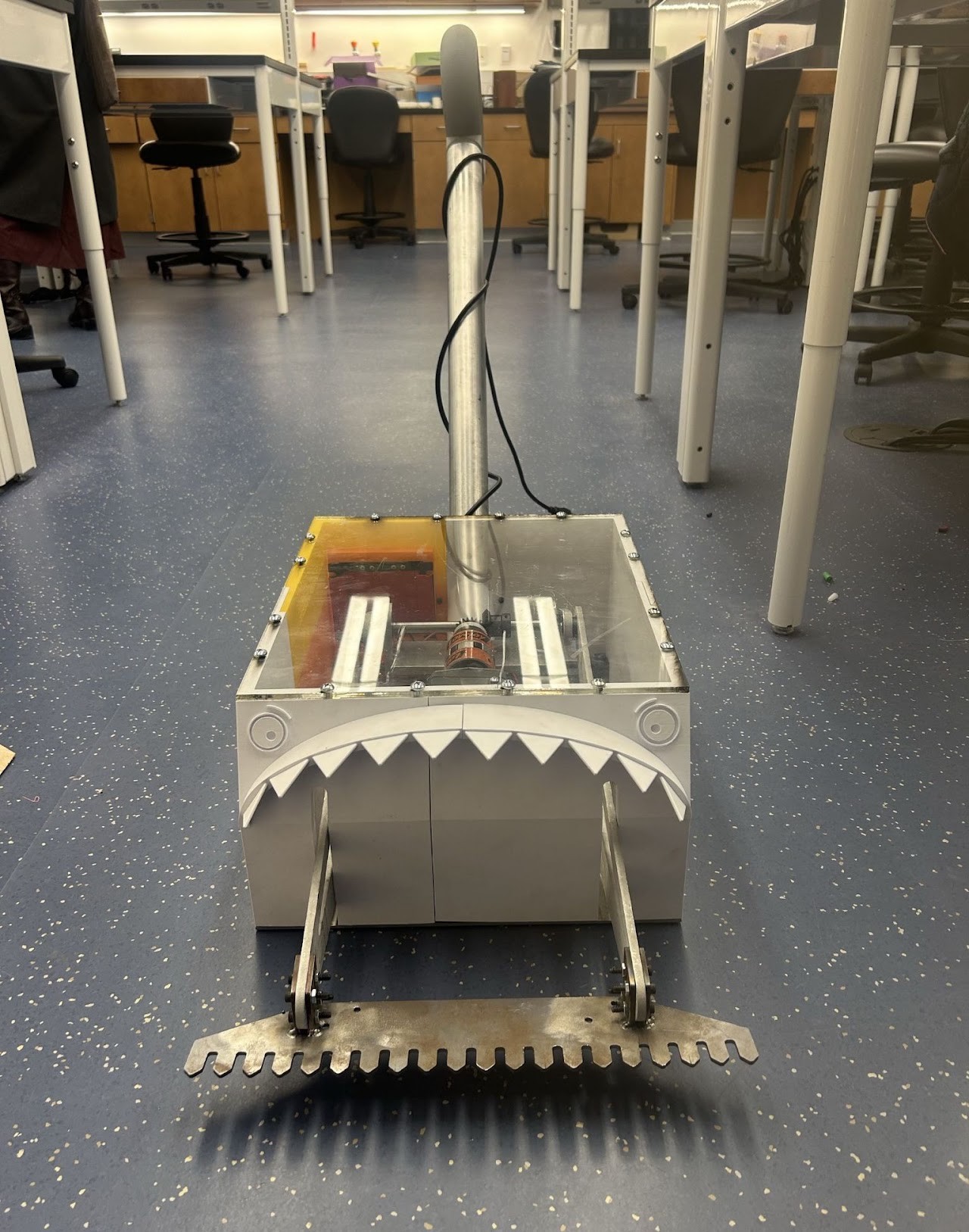
For my senior capstone at Yale, I led a team of four to build something lighter and electromechanical: the Shingle Shark, a compact, motor-driven device that could remove shingles and nails with way less physical strain on the user, and actually work on steeper roofs where the existing tools fall short.
At a glance
- Led a team of four through three build-iterate cycles, from a 3D-printed prototype to full-scale steel and aluminum builds.
- Designed and validated a four-bar scoop-and-lift linkage.
- Set a 124 lbf lifting target from 60 lbf of measured nail-removal force, with safety and material-degradation factors.
- Used FEA to trim weight from the linkage and head while keeping stress concentrations and deflection in check, meeting the under 30 lb system weight target.
Prototype 1: motion
As team lead, I split the project into functional modules and drove us through an iterative build-test-learn process rather than jumping straight to a full integrated machine.
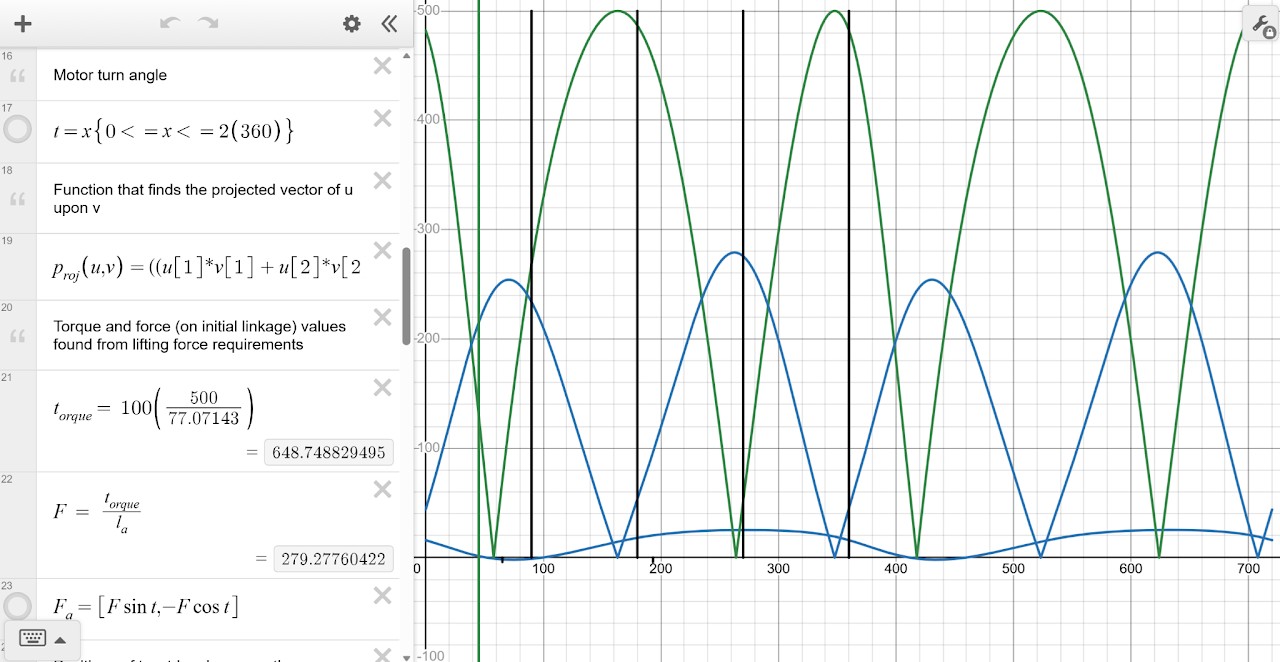
I personally led the motion generation and kinematic work from the start, using MotionGen to generate a four-bar linkage from a desired coupler path, then running a trade study against a simple lever, slider-crank, and cam-follower system to confirm the four-bar was the right call for a customizable scoop-and-lift motion. That became prototype 1, a 3D printed PLA linkage that validated the motion at small scale.
Prototype 2: full-scale steel
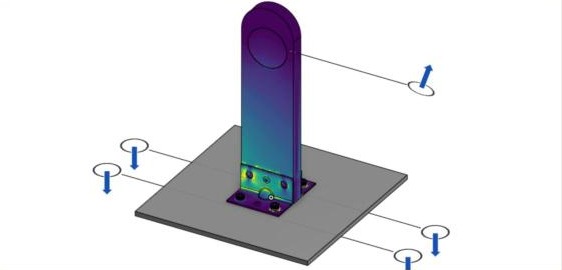
From there I moved into full-scale kinematic and structural work for prototype 2, a hand-cranked steel proof of concept, sizing and iterating the head geometry with FEA and physical testing to cut stress concentrations and improve nail engagement.
I also ran the nail-removal force testing that everything downstream was built around, pulling a real roofing nail with a prybar and spring scale to get a baseline force (about 60 lbf), then applying contingency and rust factors to land on a 124 lbf target lifting capacity. That number drove the drivetrain and structural design for the rest of the project.
Prototype 3: electric
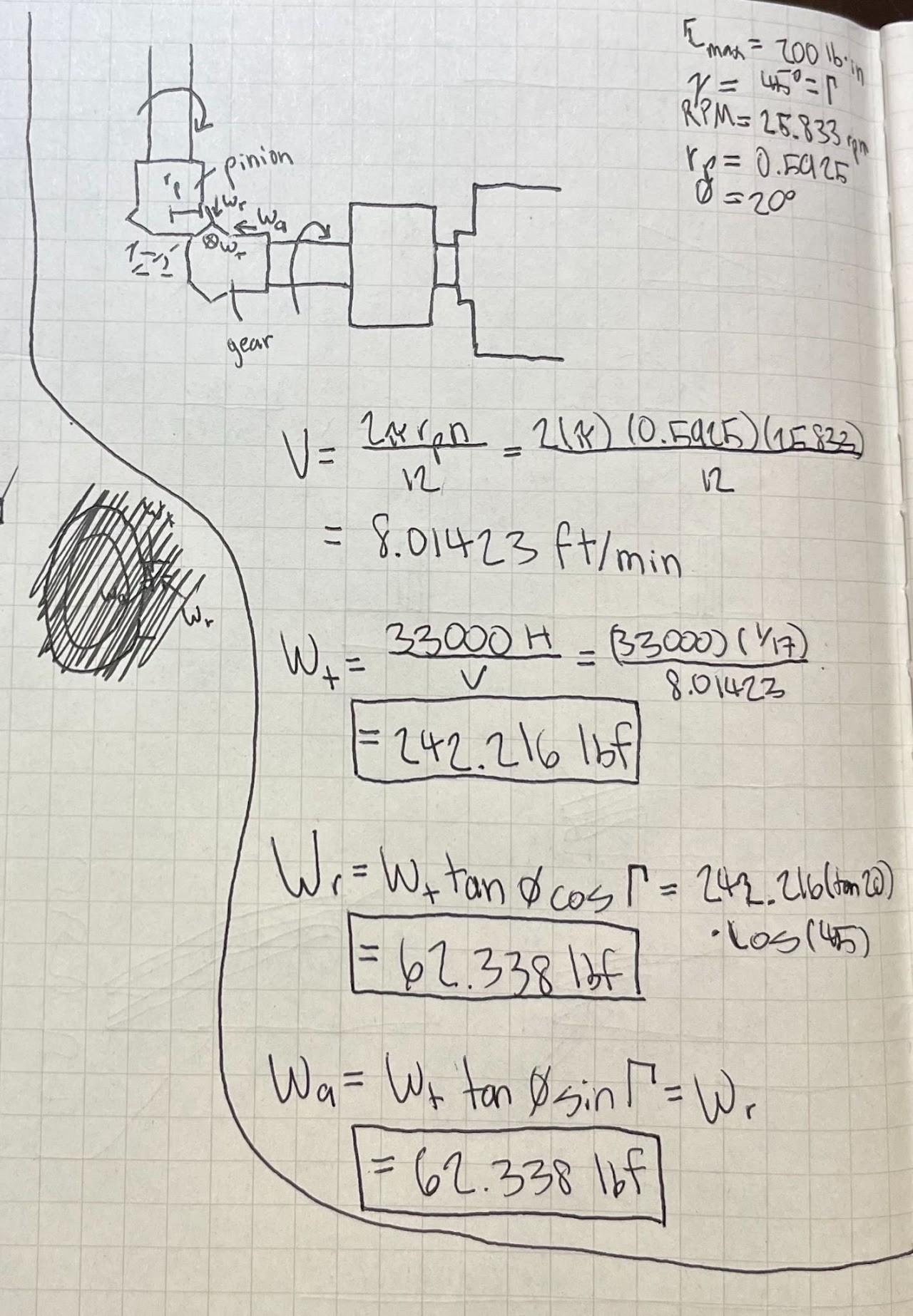
For prototype 3, the fully integrated electrically powered version, I owned the power transmission and motor selection. I ran trade studies comparing power sources and transmission options, landing on a DC motor and bevel gears for the 90 degree torque redirect, then did AGMA contact and bending stress calculations across three candidate McMaster bevel gear sets to pick the one with the best balance of safety factor, size, and cost.
I also led the deflection and durability characterization once we started seeing stand deflection and gear wear under load, and set up strain gauge instrumentation (Wheatstone bridge into a LabJack T7) to actually measure force output at the head during nail extraction.
Skills used
- Kinematic synthesis and linkage design
- CAD
- FEA for stress and stiffness
- AGMA gear stress calculations
- Motor and drivetrain sizing
- Mechanical trade studies
- Machining and fabrication (steel and aluminum)
- Strain gauge instrumentation and calibration
- Team leadership