Background
In September 2026, I joined the Robotics and Cybernetics (RobCib) group at Madrid's Center for Robotics and Automation (CAR), a shared laboratory between the Spanish National Research Council (CSIC) and the Technical University of Madrid (UPM).
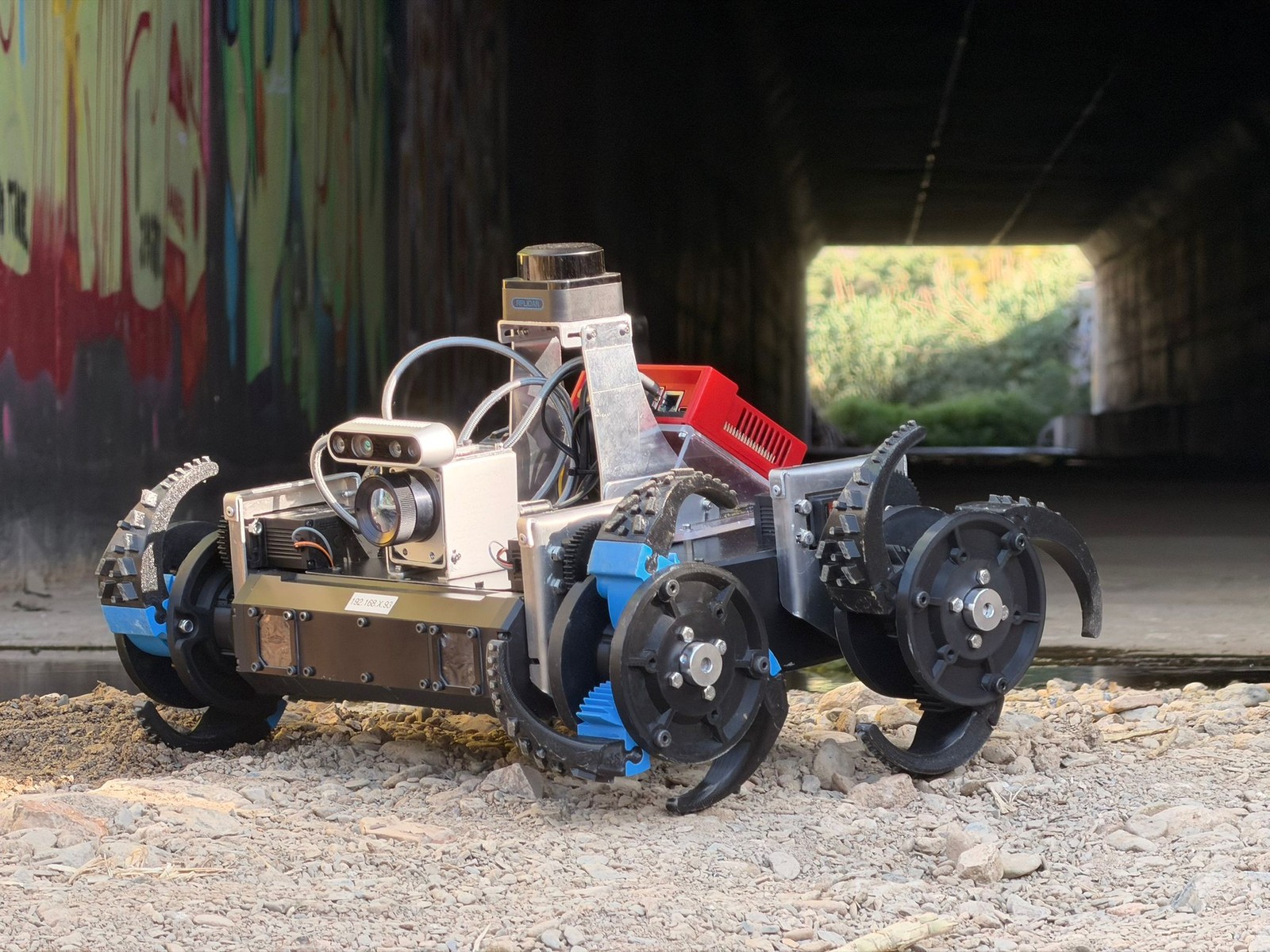
Given RobCib's strong focus on search-and-rescue robotics, my mentors, researchers Dr. Antonio Barrientos Cruz and Jaime Bravo Algaba, have grown increasingly interested in exploring the benefits of configurable robotics. Configurable robots can conform to whichever form factor best suits a given environment.
In our case, the robot can convert from having circular wheels to c-shaped wheel-legs, known in the field as whegs. In circular form, it can traverse flat, homogeneous terrain easily, while in leg form it's better suited for climbing and traversing rubble.
Gearbox design and analysis
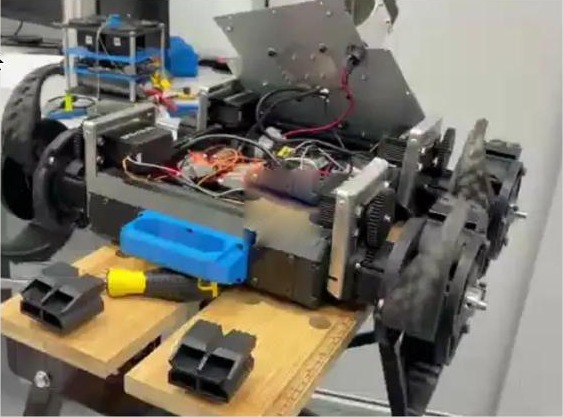
The drivetrain behind the shape change is a compact planetary gearbox. I'm doing the gear analysis myself in MATLAB, following VDI 2736, the German guideline for thermoplastic gears, and I audited the script against the standard before trusting it.
- Layout. Three planets, 16-tooth sun, 11-tooth planets, 38-tooth ring, module 1 mm, face width 10 mm, with profile shifts to balance tooth strength.
- Materials. Sun and ring printed in PA12 (MJF), planets in stainless steel.
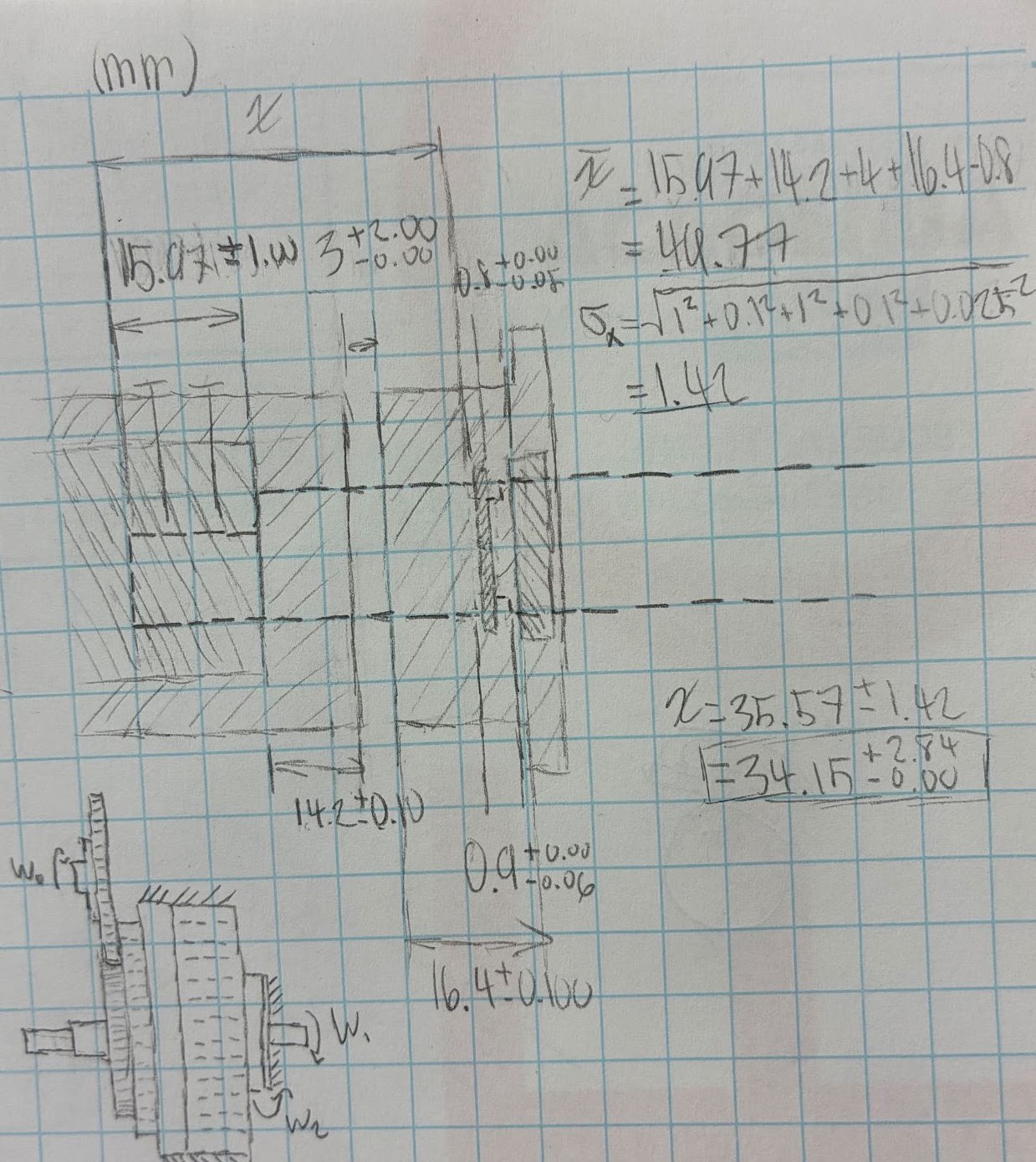
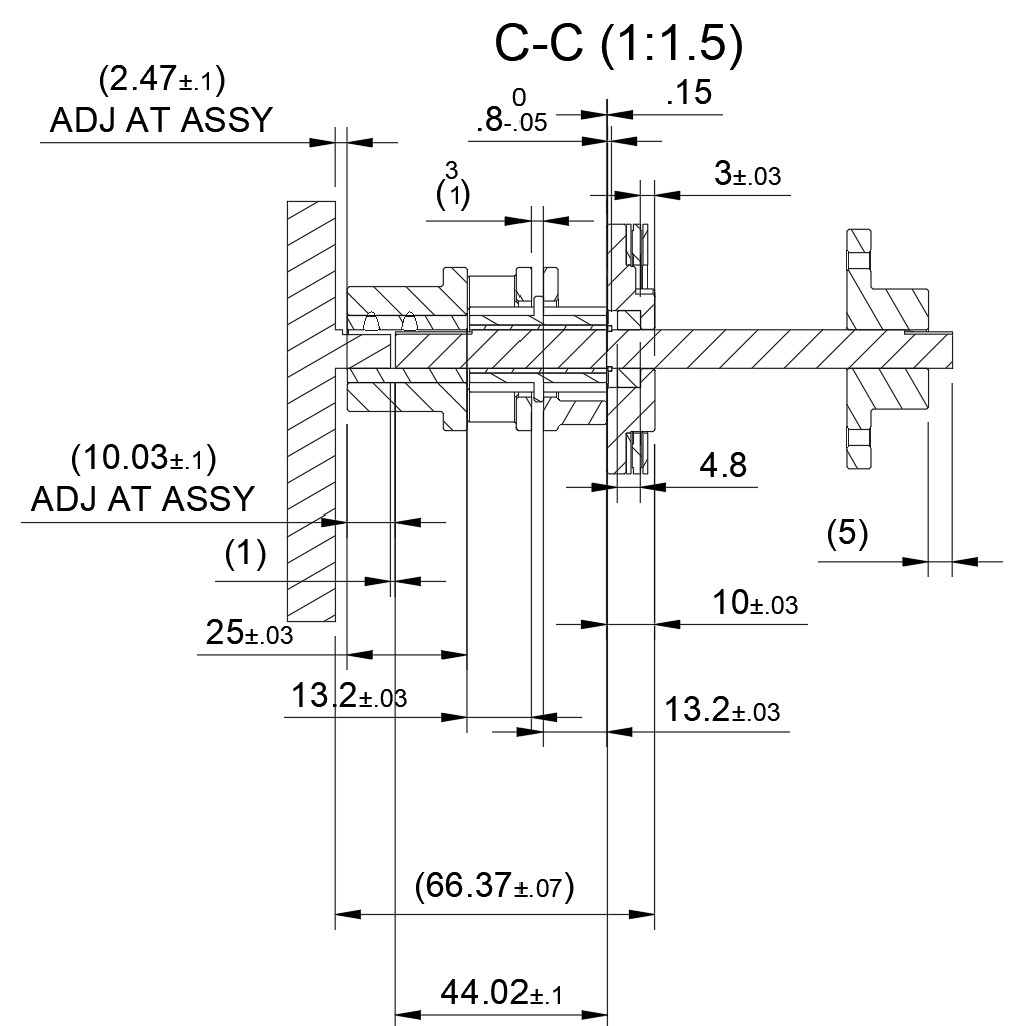
- Deliverables. 3D models, 2D manufacturing drawings with GD&T, tolerance stack-up and a BOM.
Current work
- Actuator drivetrain. Developing a chassis-mounted actuator drivetrain for continuous wheel reconfiguration, including a three-planet planetary gearbox, a first-pass VDI 2736 nylon gear load and thermal analysis, tolerance stack-up, 3D models, 2D manufacturing drawings with GD&T, and BOMs.
- Research. Co-authoring a paper on a two-input differential transmission that uses coupled epicyclic gear stages to control wheel locomotion and shape reconfiguration independently.
- Autonomy. Redesigning the transformable wheel-leg for a multi-terrain search-and-rescue robot, with machine-learning-based autonomy planned.
- Wheg redesign. Move away from the earlier gear-inspired wheg to something that's less likely to get jammed by small debris.
- Double-elliptical gear train redesign. Make the gear train more reliable by cutting down on jamming, slipping and gear wear.
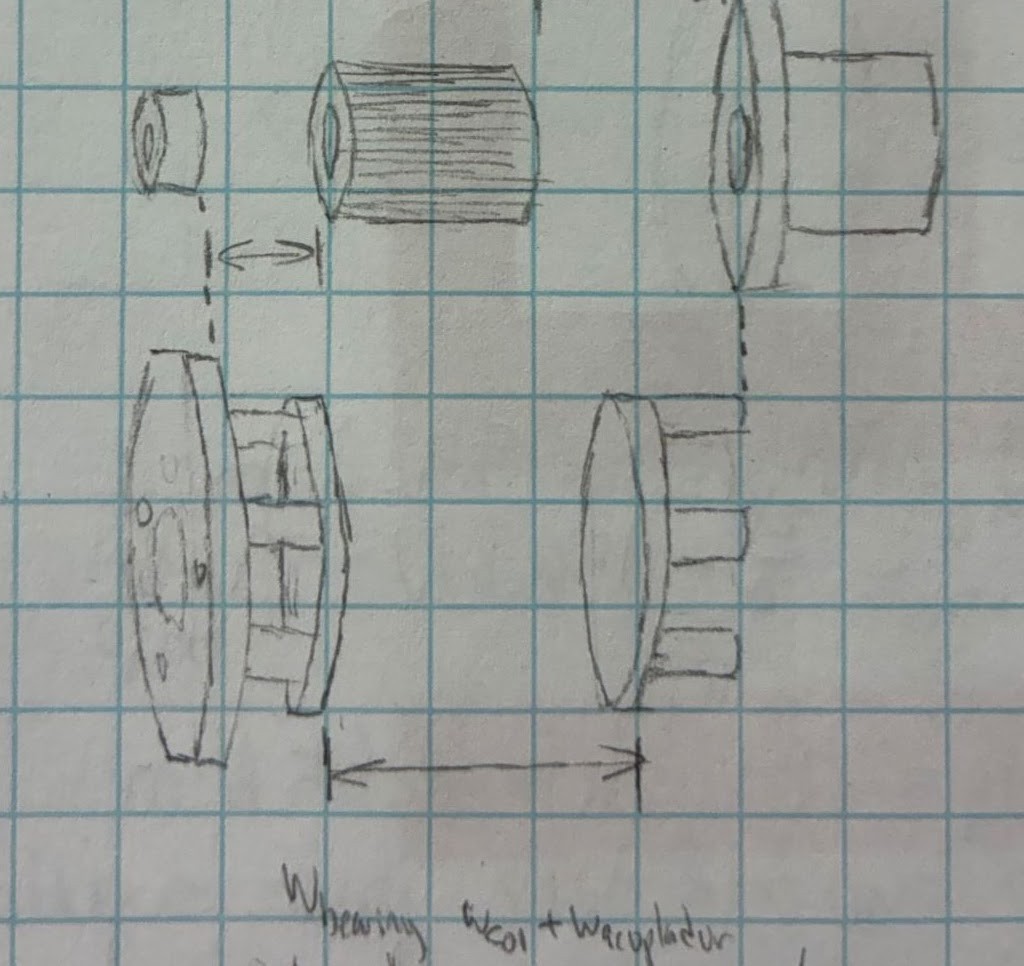
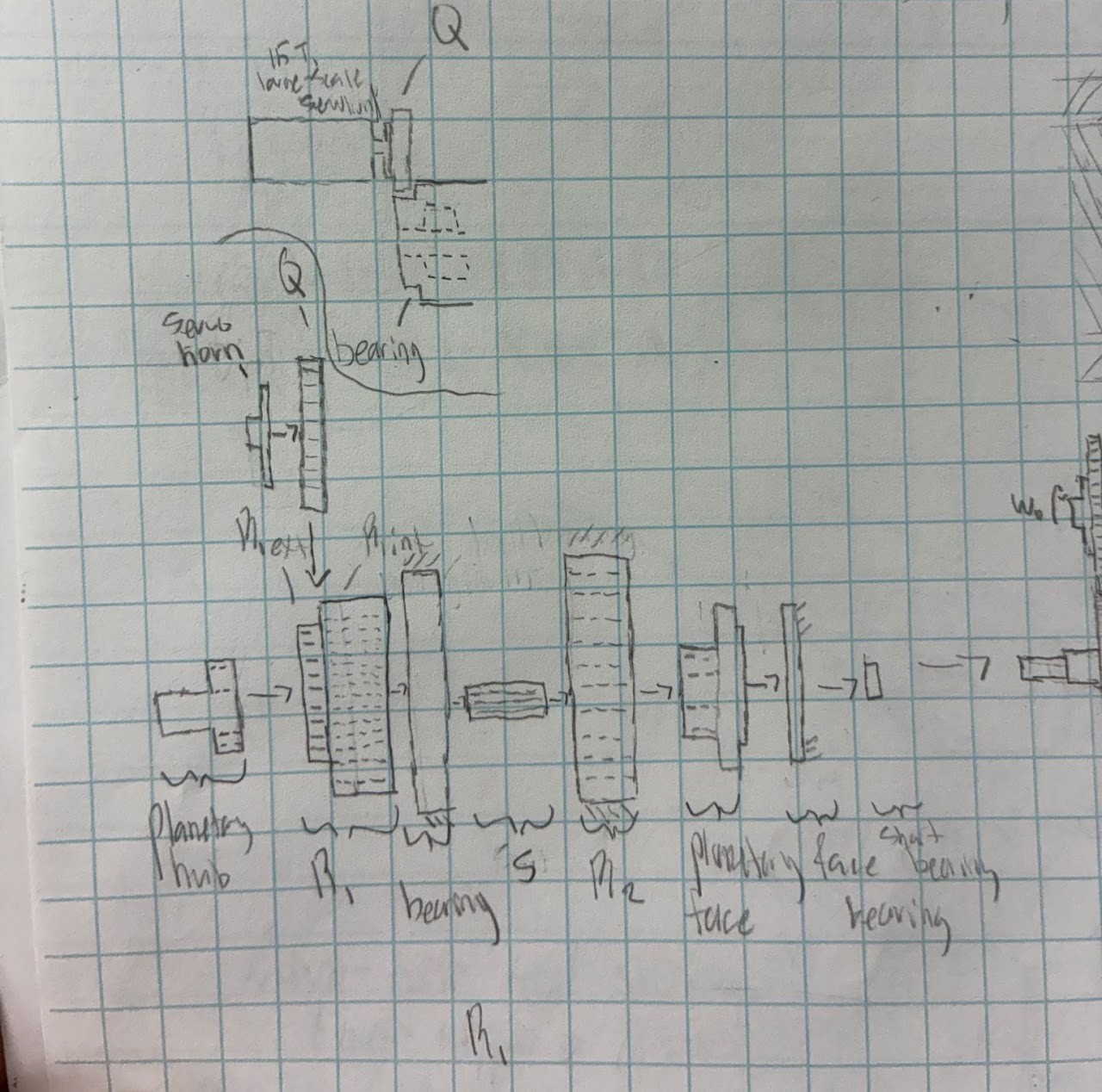
These are the working sketches from the gear train redesign.