Project goal
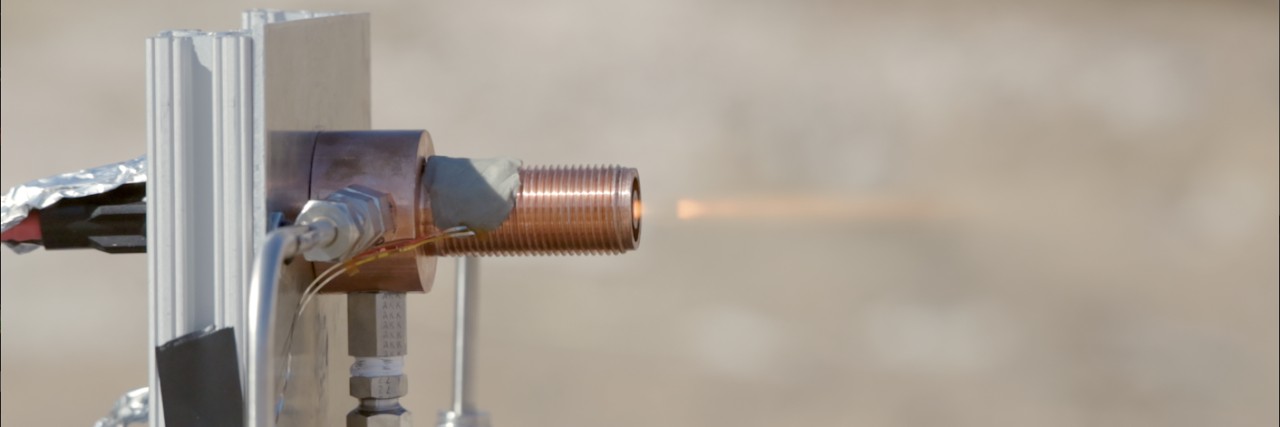
Design and manufacture an Augmented Spark Ignitor (ASI) that will serve as the primary source of ignition for an ethane and nitrous oxide powered rocket engine.
Our previous engine, Yengine 1.0, burned IPA and nitrous oxide. Yengine 2.0 is regeneratively and film cooled and runs on self-pressurizing ethane and nitrous oxide.
Design and methodology
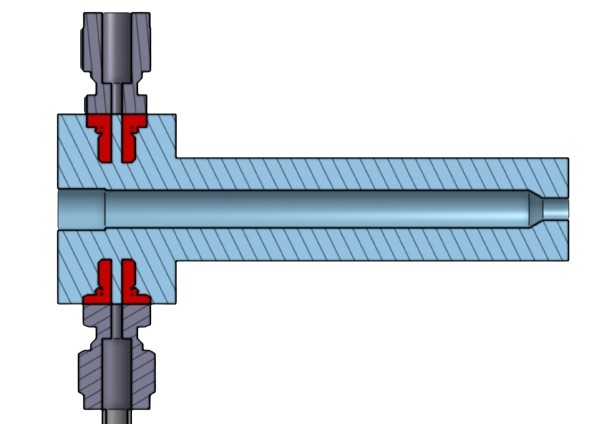
After setting target combustion parameters, such as the ASI chamber pressure and thrust, based on the requirements of our main engine, we characterized the combustion properties of our propellants, ethane and nitrous oxide, using NASA's chemical equilibrium analysis (CEA). Using isentropic flow relationships, we sized the chamber and throat cross-sectional areas.
We picked a chamber length that would allow satisfactory propellant mixing while avoiding unwanted thrust, and we left out the diverging section of the nozzle.
Manufacture
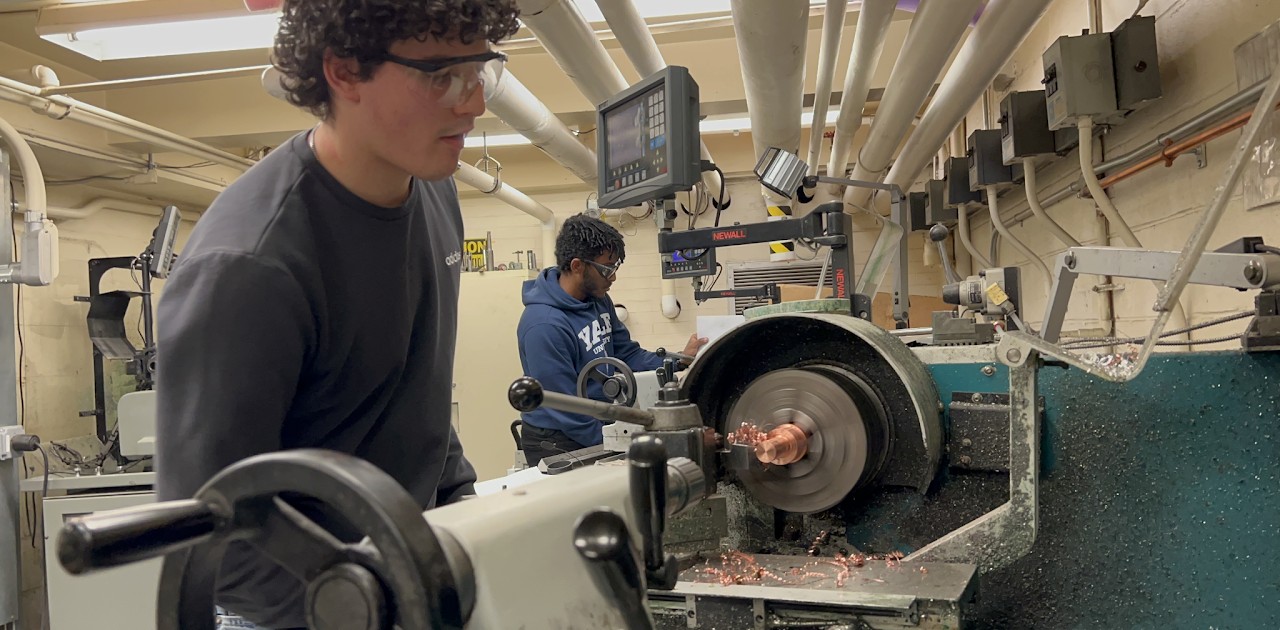
Copper was selected as the chamber material for its thermal conductivity, in the hopes that this would let heat on the chamber walls dissipate to the surroundings. I cut, lathed, milled, and drill pressed two ASIs from a copper rod, and ran quality testing on both of them as well as two more.
Assembly
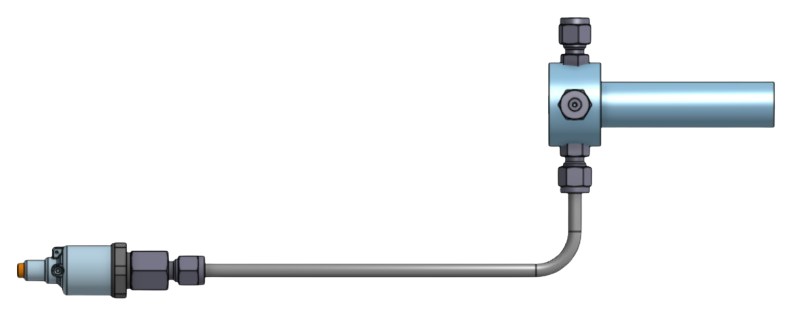
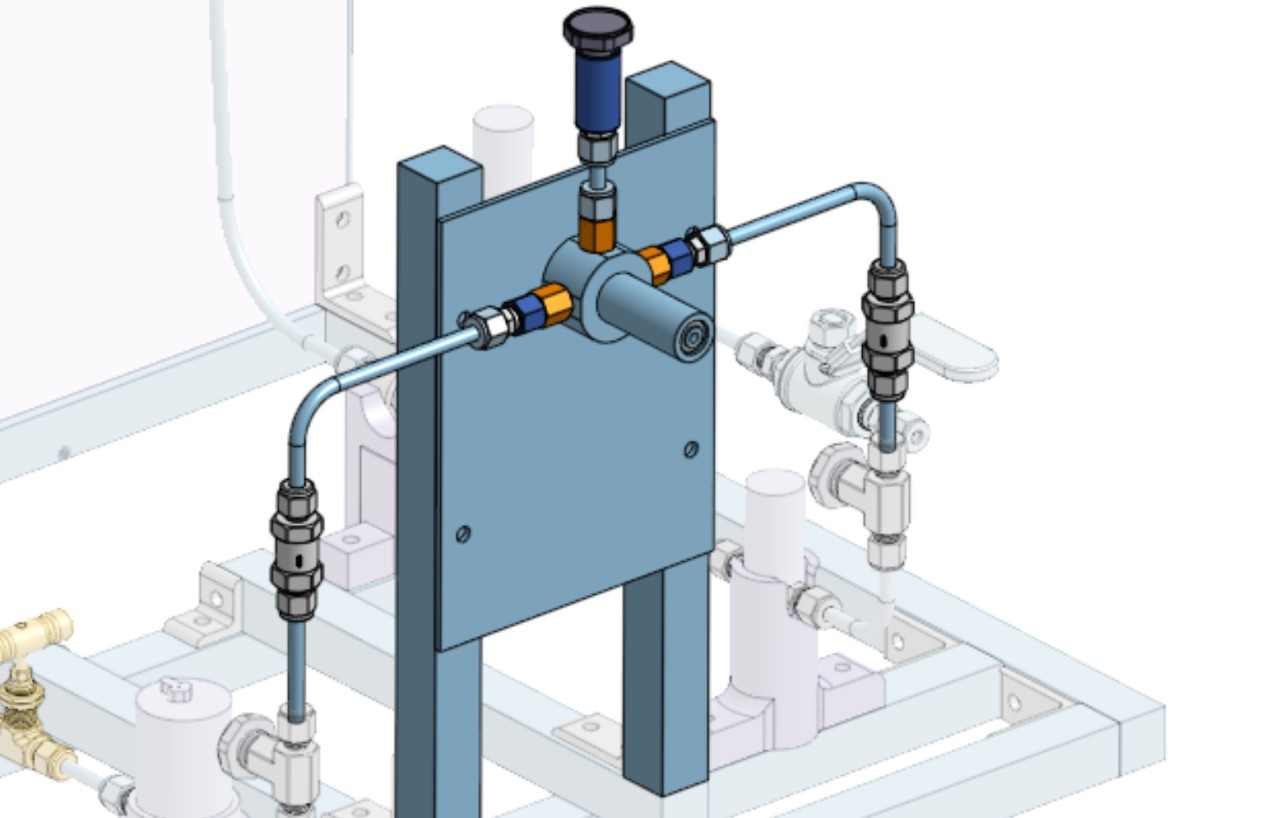
The chamber was mated to the fluids supply system using two o-ring boss (ORB) fittings followed by 1/4 inch Teflon-lined NPT fittings. The ASI was mated with a standoff to a pressure transducer so we could monitor chamber pressure during testing. The outside of the chamber is threaded so it can screw into the injector plate. A spark plug screws into the back of the ASI, sealed with a built-in crush gasket. The ASI was mounted to the test stand with four screws.
Testing
Leak test. A leak test cap was manufactured to screw over the end of the ASI and plug the nozzle. Using an air compressor, the ASI was pressurized to 150 psi to make sure any leaky seals were corrected.
Static fire. We ran a series of static fire tests of the ASI with 1 and 3 second burn times.
Results and significance
- The team designed, manufactured, assembled and tested the ASI with 1 and 3 second burn times. The chamber withstood the high pressure (100 psi) and temperature (2300 K) conditions.
- The ASI showed inconsistencies in tests run close together in time, which gives the team good work to refine the design.
- This was the first set of hot fires of any kind for the team and sets a strong precedent for future tests.
Skills used
- CAD (Onshape)
- Mechanical design
- Machining (lathe, mill, drill press)
- Testing and troubleshooting